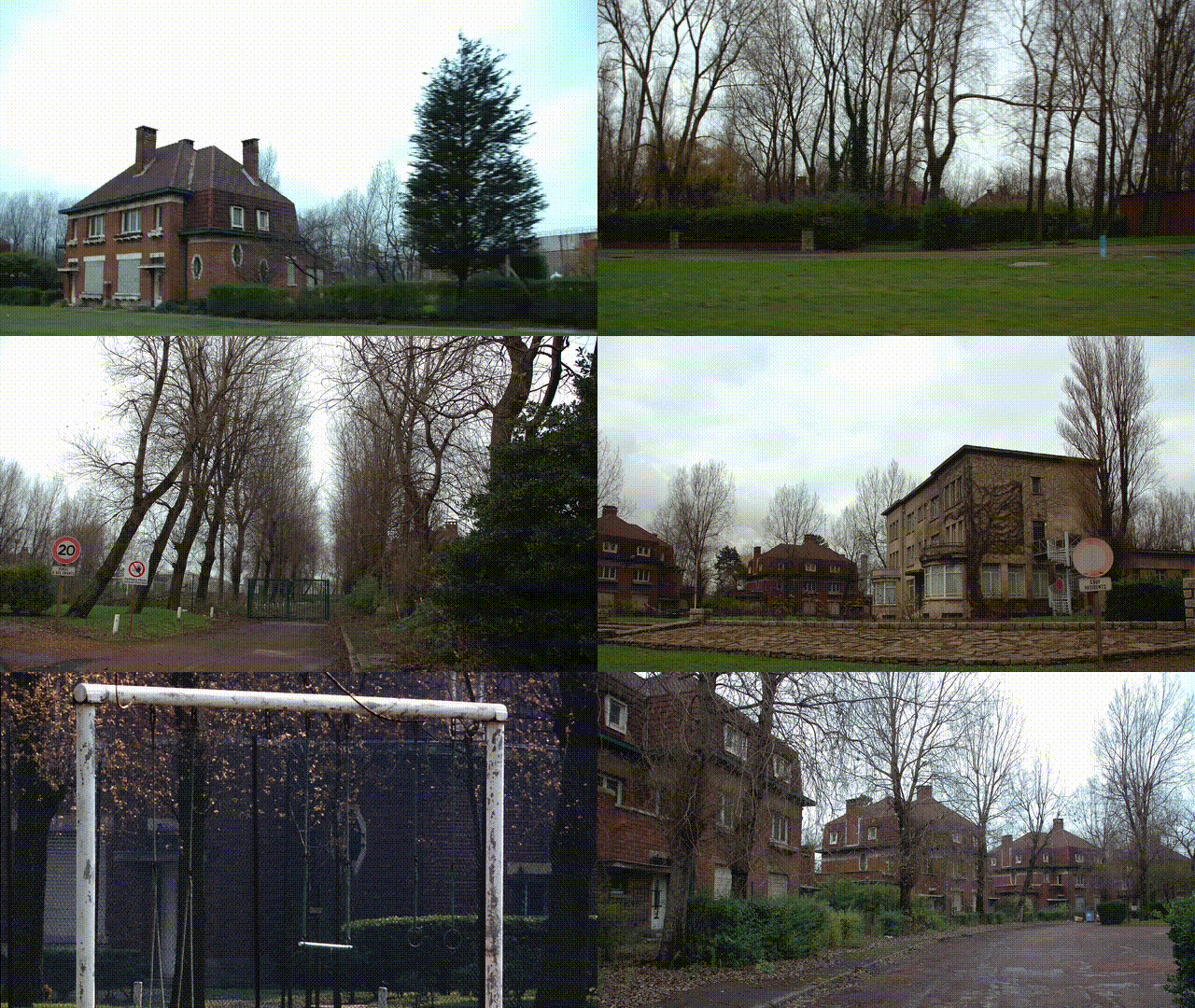
The BP area, called 'la cite des ingenieurs' is located in the harbor area of Dunkerque, just 100 meters away from the oil refineries. This housing area reflects the ideals of the modernist architecture of the garden village, with its lay-out of green space and spacious houses. This housing area also reflects the ideals - and their ambiguity - of the 20th century western thinking in urban and industrial planning: people live near their work, engage with it and are available all the time. The area aims to generate a sense of 'neighbourhoodness' which can also be seen as paternalistic: communal playground, communal tennis court, communal spaces, and of course the nearby company as a social working area. The social positions of the residents inside the BP company correspond with the size of the house they inhabited. The scale model of the 'cite des ingenieurs' the hierarchy appears in the different size of the buildings. The area is 'a city of dreams', imbued with optimism and a strong belief in the increasing development of mankind, endless economicalgrowth and welfare for everybody, with the production of oil as the motor behind this.
Since 4-5 years the area has been deserted: pollution appeared to be at such an intolerable level that it was considered irresponsible to allow people to live there any longer. During the past years, the area has been maintained in a representable state: the houses are well kept, the grass of the lawn cut, and the children's playground looks like the children will return any minute. This area functions as a critical model, a monument. Not just as a memory for an architectural practice but by 'just being there', la cite des ingenieurs represents a way of thinking and acting, incorporating the different layers of the nature of its idealism, history, life and critique. Projecting the architecture of the 'cite des ingenieurs' in a maquette, a scale model, it functions as a discursive piece, as a tool which generates reflection on the different issues that can be found in these layers of its existence. Disguised as an architectural form, the model raises questions about the nature of living, the capital of economic space and the public and private sphere. Now that is impossible to live there or to make the houses productive in any other way, this model takes a critical status, by placing memory back in the archive of knowledge again, using the space of the model as a vehicle for recovering and tracing old and new narratives.Usually a model is preceding the architectural reality to give a preview, and to create a thinking model of how to organize public space, as a model for imagination. This model however is functioning the other way around, by providing procedures of rethinking reality that is almost disappearing, in order to allow us to rethink the future. Model City is accompanied by a 'boite des idees', both on the website of the FRAC in Dunkerque (where the piece was shown) and in the exhibition, for public contributions on questions the project is focusing on: the dynamics of the changing use of architecture, should it be re-used at all, what happens to the underlaying ideas, how can new ideas and initiatives relate to history and heritage - and should they do so?